
Every October, the world turns pink.
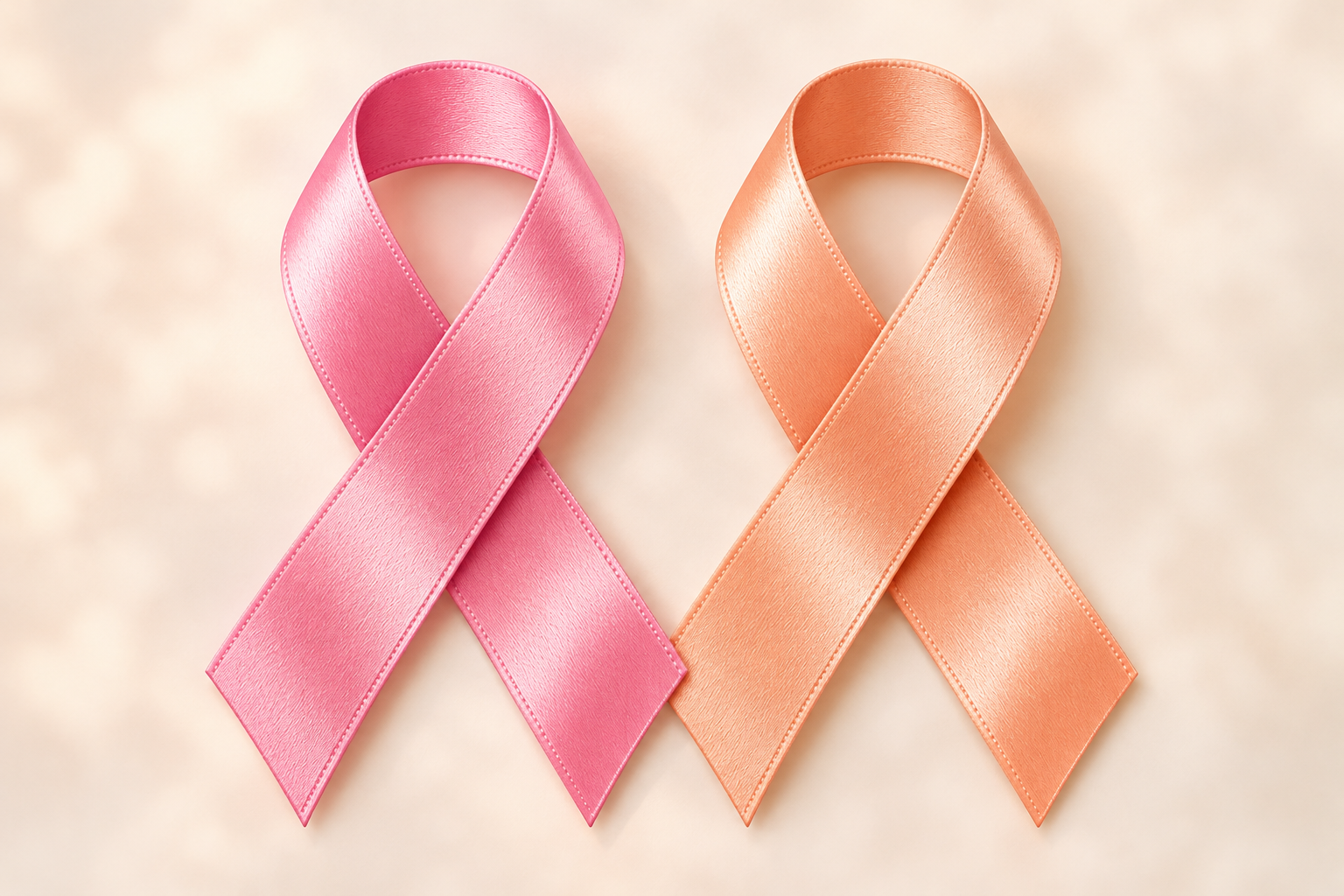
Pink ribbons appear on everything from coffee cups and clothing to storefronts and football fields. Buildings glow pink, communities organize fundraising walks, and businesses display ribbons in support of Breast Cancer Awareness Month.
The pink ribbon has become one of the most recognizable symbols of health awareness in the world.
But have you ever wondered how it all began?
You might be surprised to learn that Breast Cancer Awareness Month is younger than you think, and that one of the women who helped inspire the ribbon movement didn’t choose pink at all.
Her ribbons were peach.
Before the Ribbons: A Time When Breast Cancer Wasn't Openly Discussed
For much of the 20th century, breast cancer was a subject many women discussed only in whispers, if they discussed it at all.
A diagnosis often carried fear, embarrassment, and uncertainty. Public conversations about breast health, mastectomies, and cancer treatment were far less common than they are today.
That began to change as women increasingly spoke openly about their experiences.
In 1974, First Lady Betty Ford underwent a mastectomy after being diagnosed with breast cancer. Rather than keeping her diagnosis private, she discussed it publicly, helping bring breast cancer into the national conversation.
Her openness encouraged other women to take their breast health seriously and helped challenge the silence surrounding the disease.

1985: Breast Cancer Awareness Month Is Born
The first National Breast Cancer Awareness Month campaign began in October 1985.
Organized by the American Cancer Society in partnership with Imperial Chemical Industries, a pharmaceutical company, the original campaign lasted just one week.
Its primary goal was straightforward: educate women about breast cancer and encourage screening and early detection.
Over time, the campaign expanded into the month-long observance we recognize today.
But there was still something missing.
A symbol.
Something simple that people could wear to show support, encourage conversations, and bring attention to the cause.
And that’s where the story gets interesting.
The Woman Behind the Peach Ribbon

In the early 1990s, a California woman named Charlotte Haley began making breast cancer awareness ribbons by hand.
But Charlotte didn’t choose pink.
She chose peach.
Breast cancer had affected several women in her family, and she was frustrated by what she believed was inadequate funding for cancer prevention research.
So she decided to do something about it.
Charlotte made small peach-colored ribbons and distributed them with cards urging Americans to contact their legislators and advocate for greater investment in cancer prevention.
Her grassroots campaign attracted attention, including interest from SELF magazine and cosmetics executive Evelyn Lauder.
But Charlotte wasn’t interested in turning her campaign into a commercial venture. She declined their invitation to collaborate.
The peach ribbon remained her symbol.
Meanwhile, another ribbon was about to become famous.
How the Pink Ribbon Took Over
The Susan G. Komen organization had already been using pink in its breast cancer awareness efforts. In 1991, it distributed pink ribbons to participants and survivors at its New York City Race for the Cure.
Then, in 1992, SELF magazine editor Alexandra Penney and Evelyn Lauder of Estée Lauder launched a major pink ribbon campaign.
Approximately 1.5 million pink ribbons were distributed through Estée Lauder cosmetics counters, bringing the symbol to an enormous audience.
The little pink ribbon quickly became associated with breast cancer awareness.
And the rest, as they say, is history.
Today, millions of people recognize that simple loop of pink fabric.
But relatively few know the story of Charlotte Haley and her peach-colored ribbons.
From Awareness to Action
Over the following decades, Breast Cancer Awareness Month grew into something much larger than its founders could have imagined.
Fundraising walks, research campaigns, educational programs, and community events helped bring breast cancer into everyday conversations.
Medical research also advanced, improving screening, diagnosis, and treatment options.
But as the pink ribbon became increasingly popular, it also raised an important question:
Does wearing pink actually help?
The answer depends on what happens beyond the ribbon.
A pink ribbon can start a conversation, honor someone we love, or remind us of the importance of breast health.
But meaningful awareness goes further.
It means supporting research, learning about screening recommendations, helping people access care, and being there for friends and family members facing a diagnosis.
It also means asking questions about pink-ribbon products. When a company promises to support breast cancer awareness, it’s reasonable to ask how much money actually reaches the cause.
The ribbon should represent more than a marketing opportunity.
Beyond the Pink Ribbon: The People Behind the Cause
At A Special Place Wigs, we’ve spent more than 20 years helping women experiencing medical hair loss, including many undergoing treatment for breast cancer.
Over those years, we’ve met women from every walk of life, each with her own story.
Some arrive determined to find a wig that looks exactly like their natural hair. Others see an opportunity to try a completely different hairstyle.
Some laugh through their appointments. Some cry. Many do a little of both.
And some decide that wearing a wig isn’t for them at all.
Every experience is different, and every choice deserves respect.
Working with these women has reminded us that breast cancer awareness isn’t simply about a diagnosis, a treatment, or a pink ribbon.
It’s about people.
Their families, their friendships, their fears, their hopes, and their everyday lives.
The Meaning Behind the Ribbon
Learn More About Breast Cancer
Breast cancer awareness doesn’t end in October. For information about breast cancer, screening, treatment, and ways to support those affected, visit cancer.org
More than four decades after the first Breast Cancer Awareness Month campaign, the pink ribbon remains a powerful symbol.
But perhaps the most important lesson from its history is that meaningful change often begins with ordinary people who decide to make a difference.
A First Lady who spoke openly about her diagnosis.
A woman in California who made peach ribbons at home.
Researchers, advocates, survivors, caregivers, and countless others who refused to let breast cancer remain a subject discussed only in whispers.
This October, when you see a pink ribbon, take a moment to remember the history behind it.
And remember that while October brings awareness into the spotlight, the need for compassion, research, and support continues throughout the year.
Because behind every ribbon is a story worth remembering.
From all of us at A Special Place Wigs, we honor those facing breast cancer, those who have survived it, the families who support them, and the loved ones whose memories continue to inspire us.
Learn More
Learn More About Breast Cancer Breast cancer awareness doesn't end in October. For information about breast cancer, screening, treatment, and ways to support those affected, visit The American Cancer Society